Post Mountain

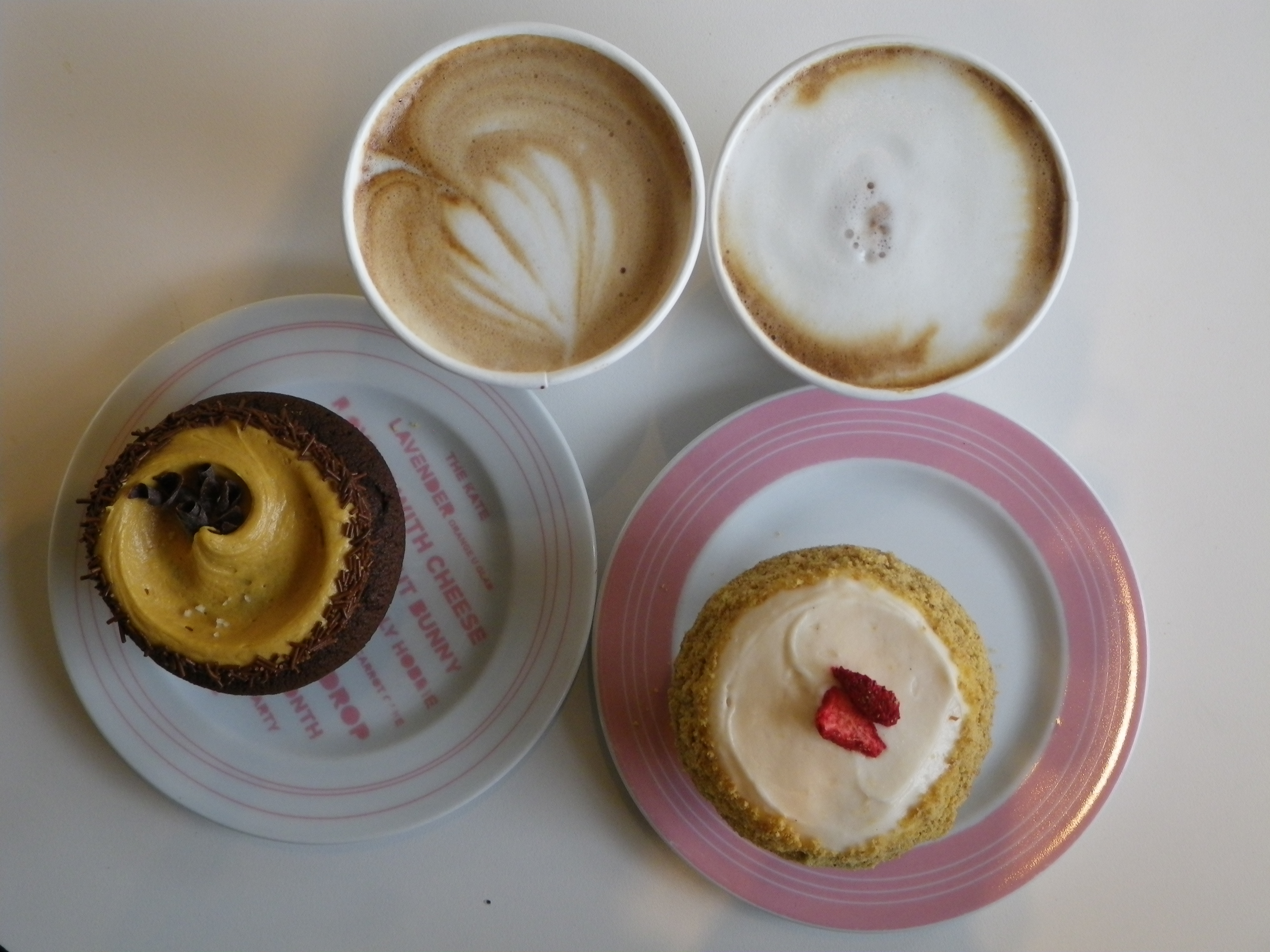
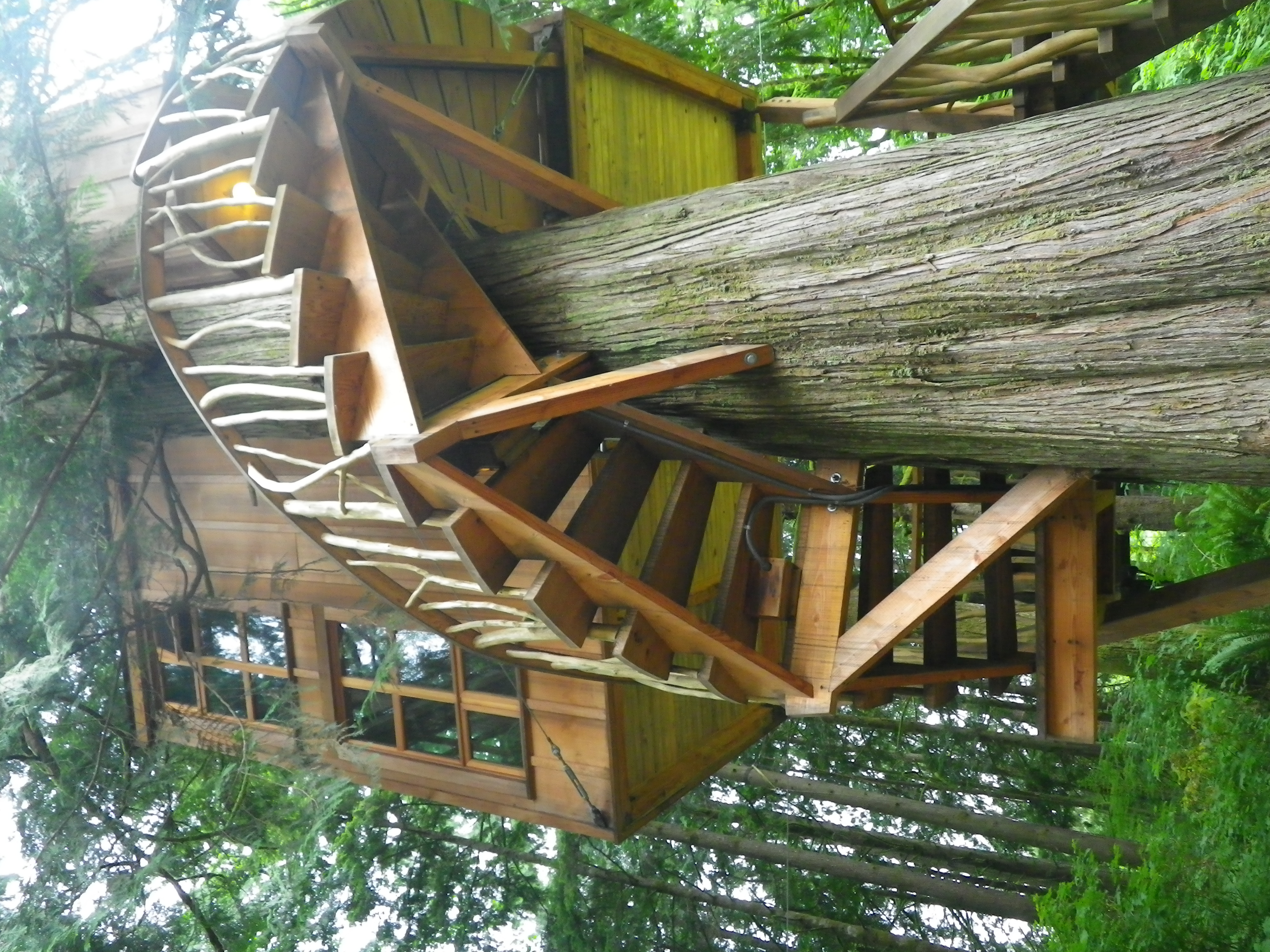
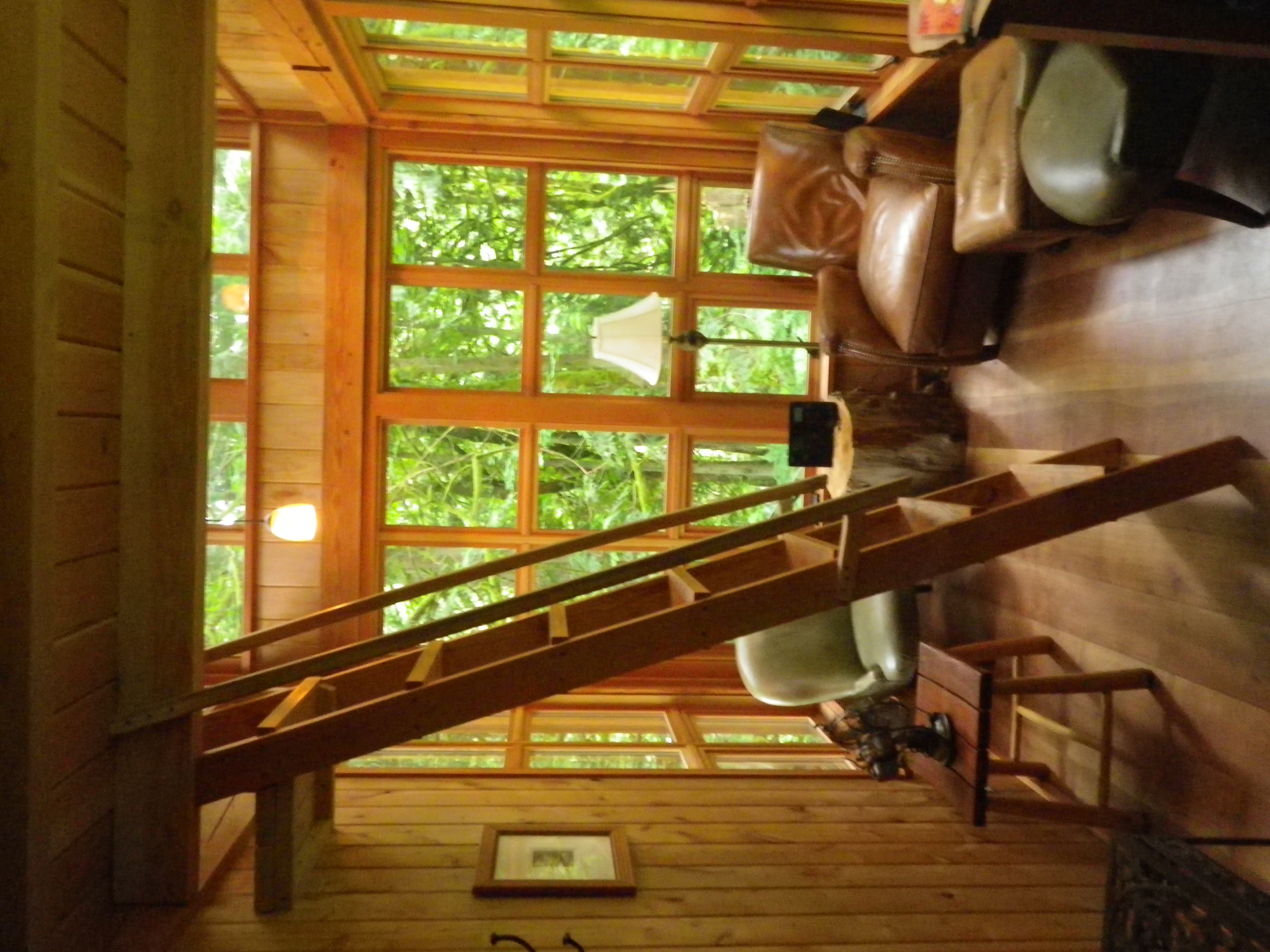
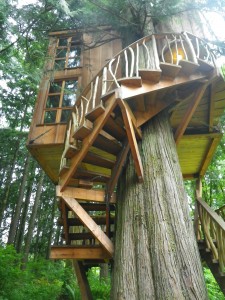
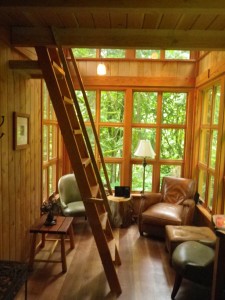
We were extremely sore, tired, and hungry. The tree house that we stayed in was amazing. It was difficult to navigate up and especially down the steps but well worth it. There were several other tree houses to stay in and smaller tree houses to lounge and play in. The forest is an old growth forest and just awesome.  We spent the day running errands and eating.

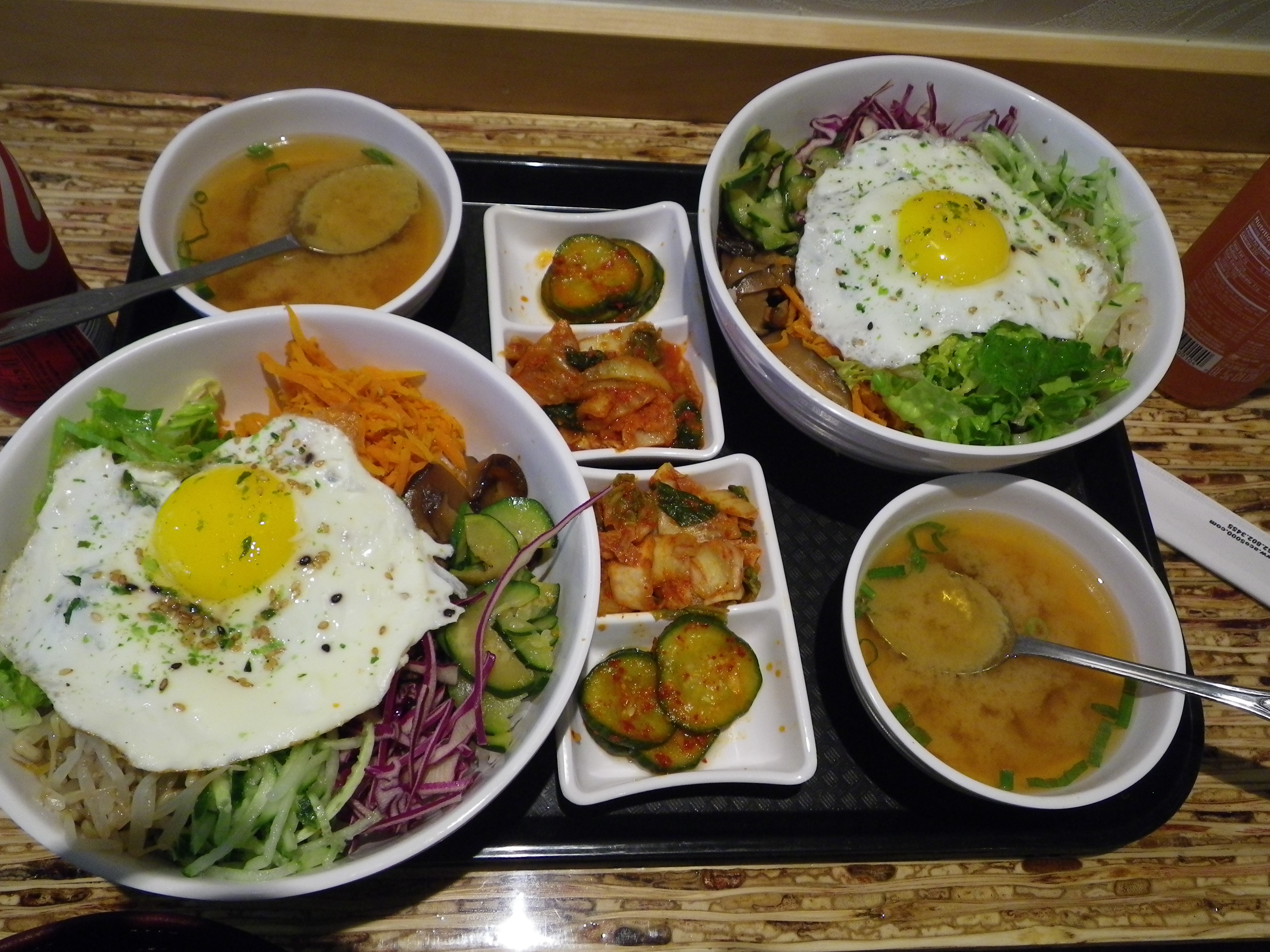
Steven was introduced to Korean food as we gobbled down as much as we could.

Day 5, Monday


This was a 14 hour hiking day and 20 hour adventure day so be warned it’s a long post.

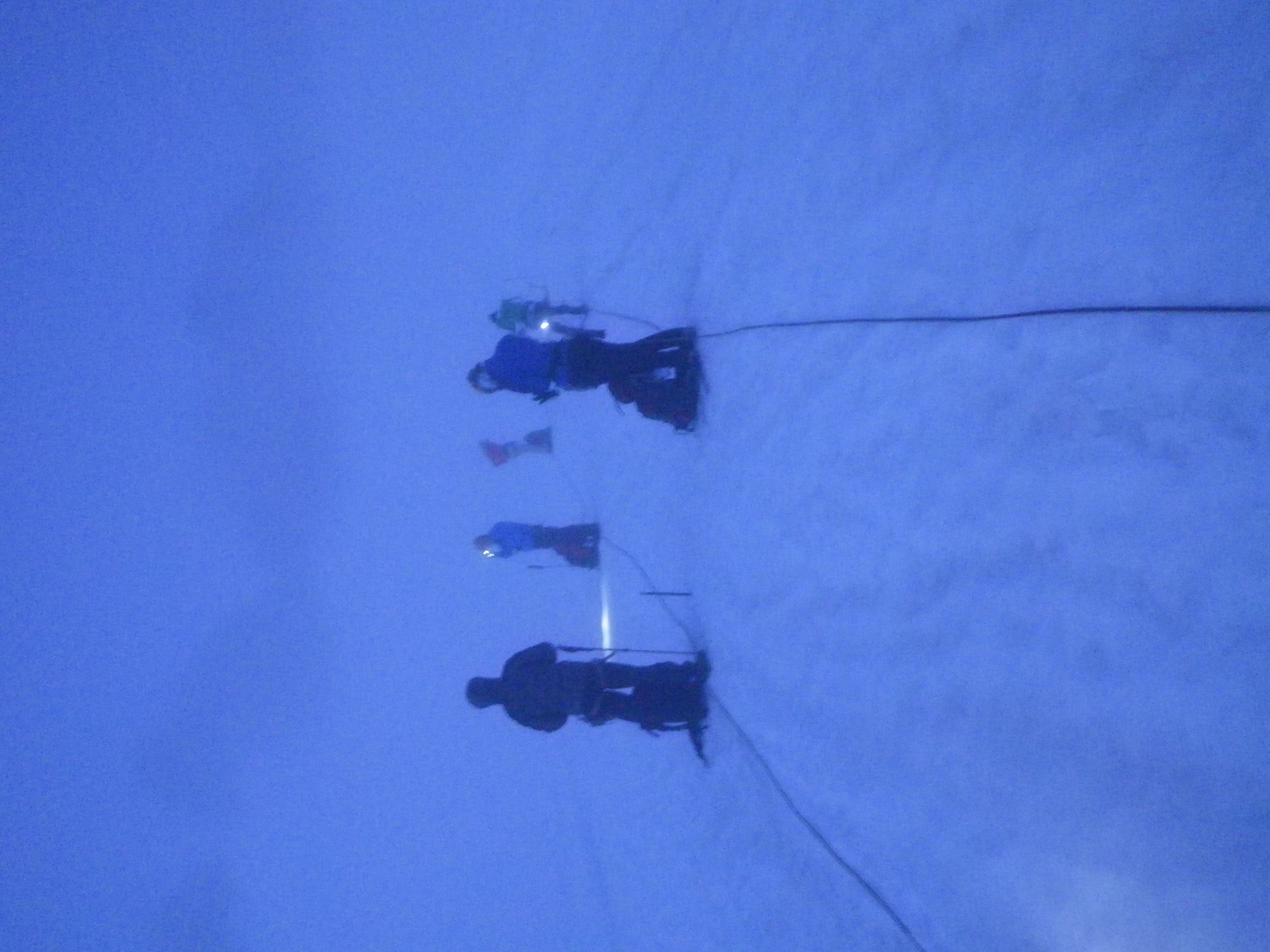
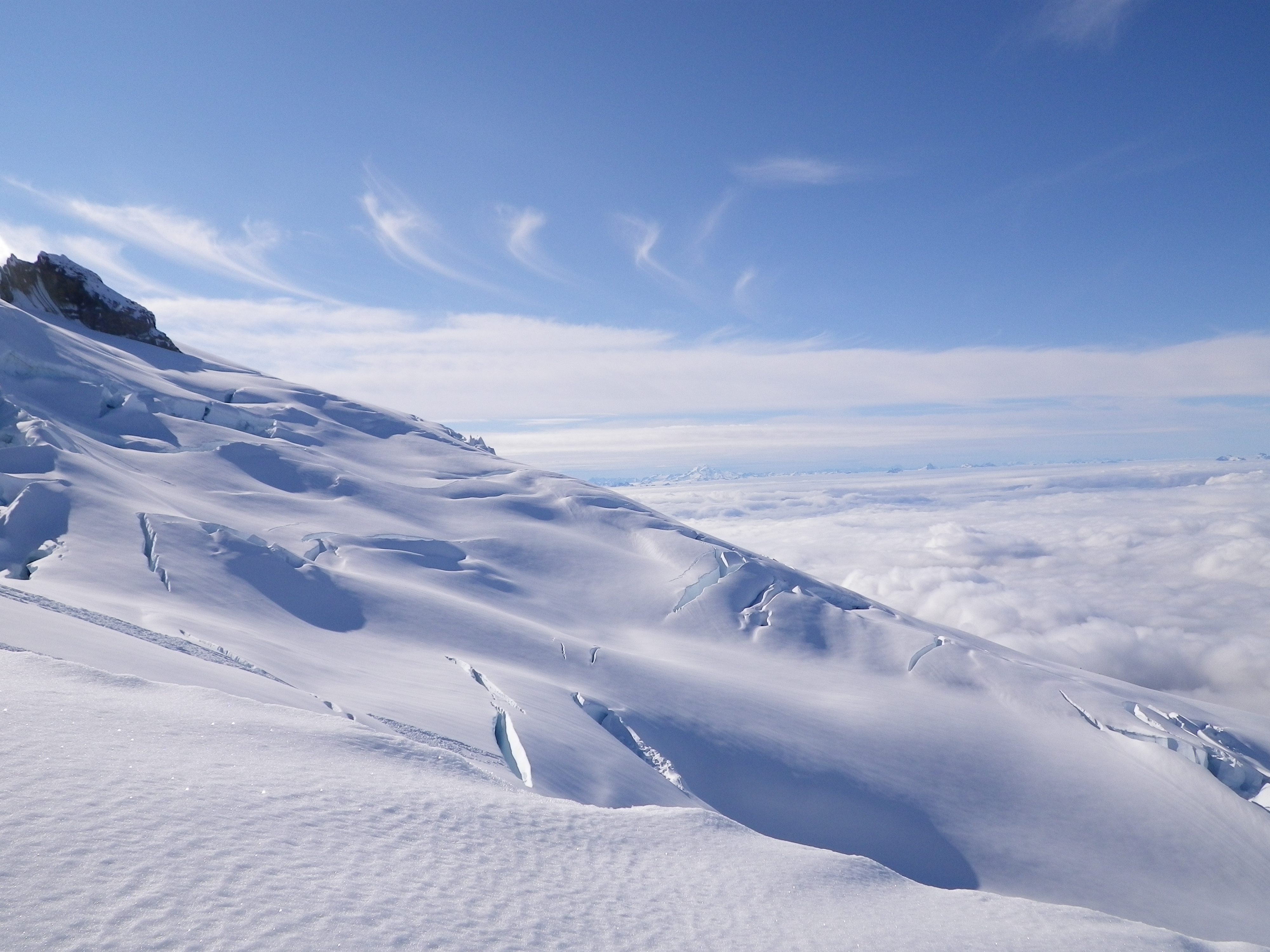
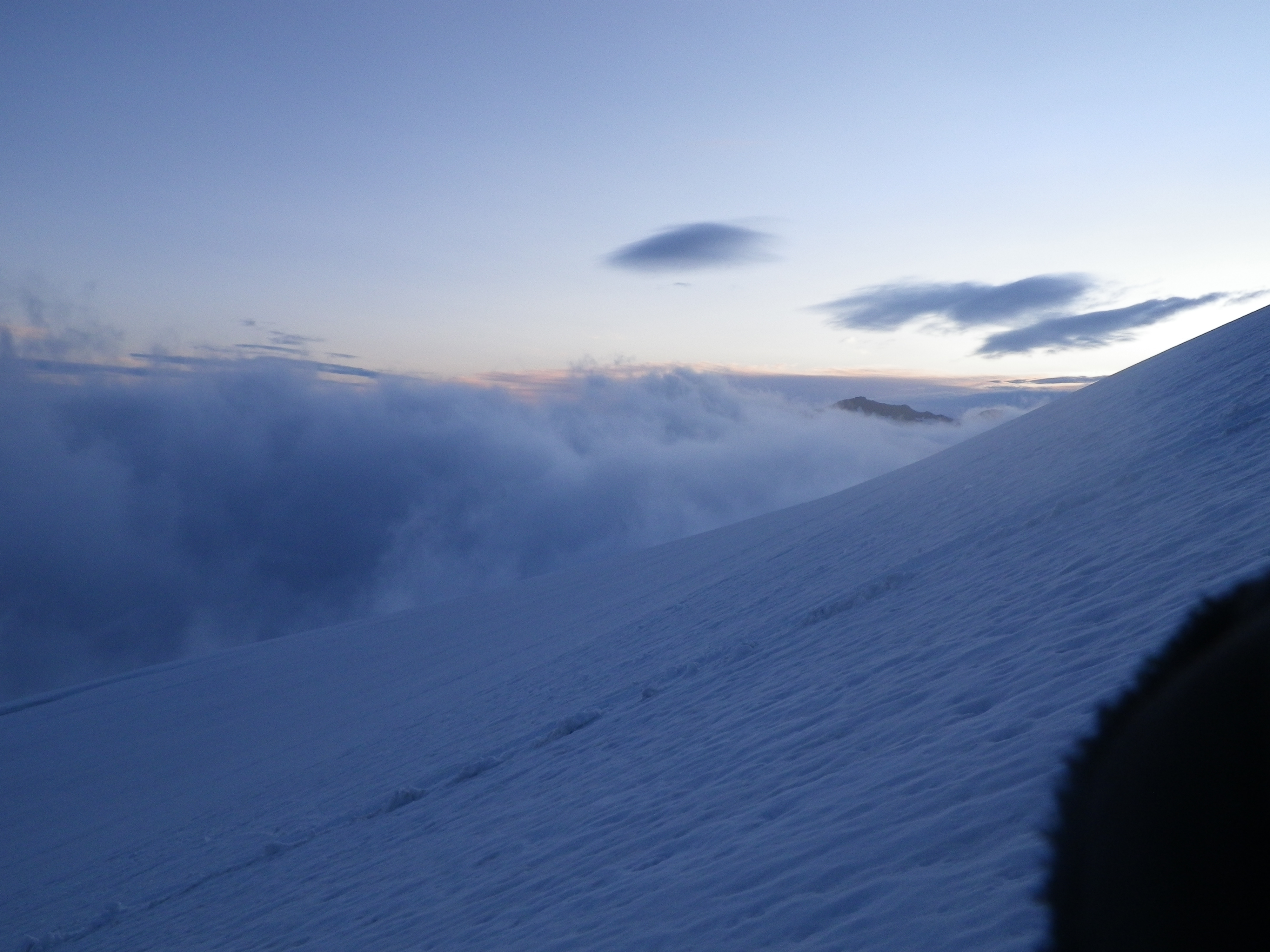
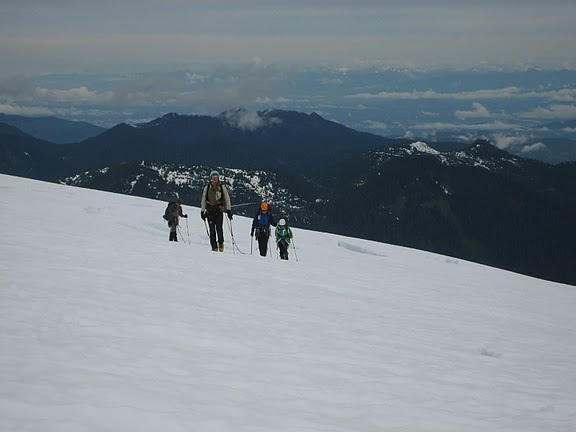
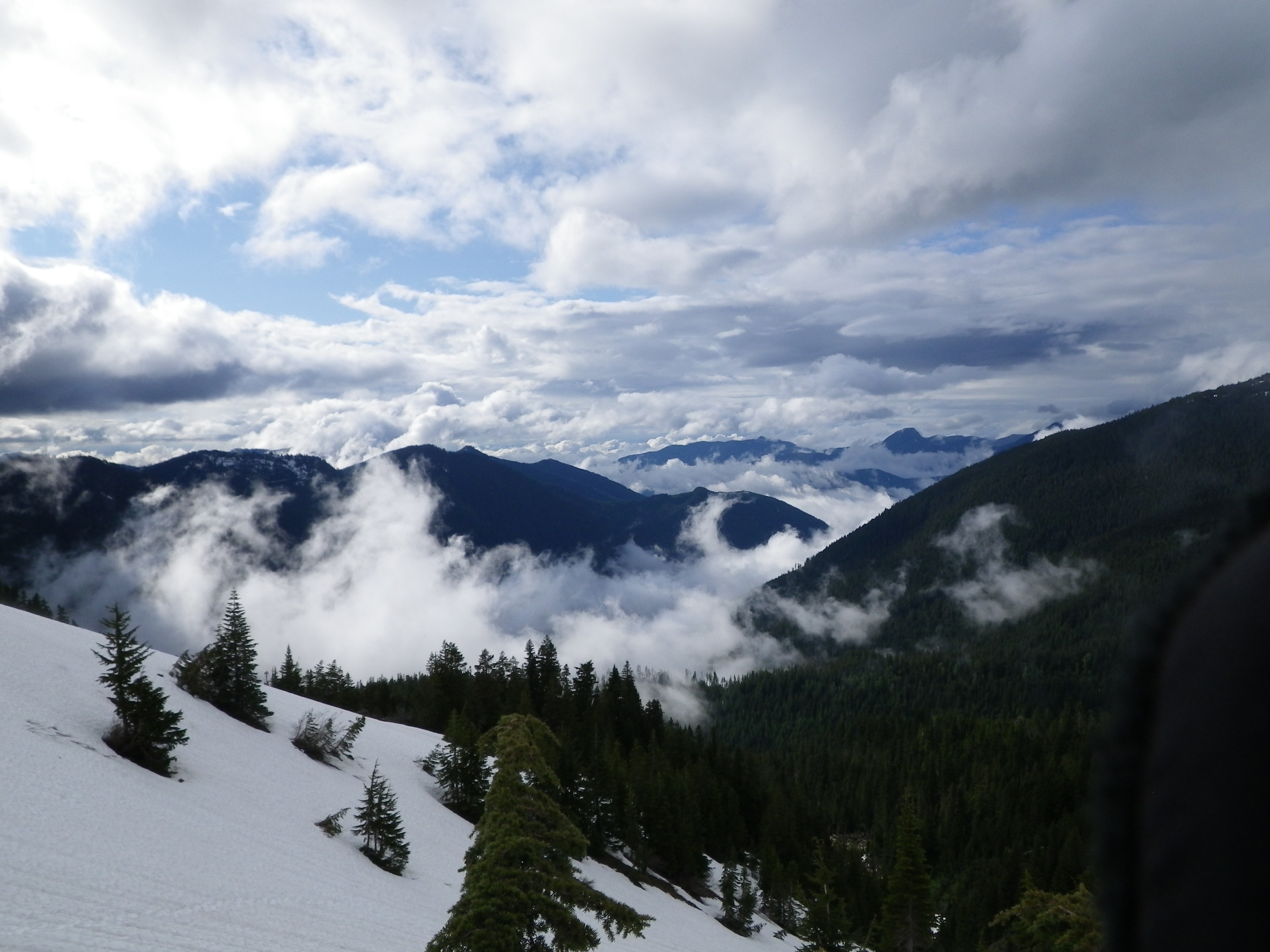
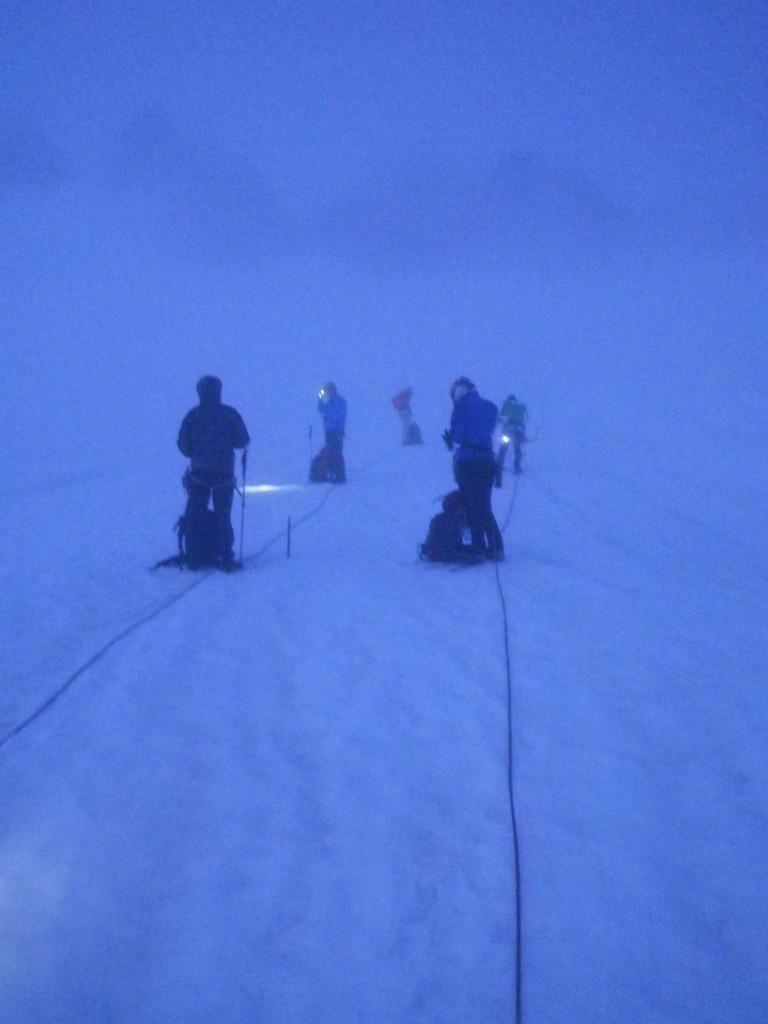
We woke up at 2am to start our summit attempt. I was so super excited that I didn’t really care about how early it was. While getting out of tent I heard an unfamiliar voice. A guy, severely under-dressed, and shivering had entered our campsite asking if we were the pros and telling us not to dump any of our water because he needed some. Other guys in the group chatted with him and directed him to the cistern we had dug, but little did I know he would try tagging along with us the rest of the day. The first thing I had to deal with in the morning was breakfast. Because of my Hunger attack on a previous day, I was only left with Peanut Crunch Clif bars, which aren’t exactly tasty. I knew today was the last day, though, so I thought it wouldn’t be a big deal. As I gnawed on my chunky wedge of food, Dave came over and told me that a cold Clif bar just wouldn’t work for the summit morning. He had made four packs of oatmeal and insisted that I eat some. He finally handed me the bowl and told me to finish it off. With all of our gear in place we attached to our rope lines and headed off in the dark towards the summit. Our headlamps lit the way and to conserve energy we were constantly looking at the ground to step where our guides had kicked steps in the snow and ice. Jenny had acquired severe shin splints, and to accommodate her our rope line was going very slowly and making painfully small steps. We trudged onward through the dark for hours. As the sun rose we had reached the cloud level and the view was spectacular. The point when the sun rises is my favorite moment while mountain climbing. We continued onward intermittently making contact with our leech from earlier in the morning. At one point we found him wandering in a crevasse field in the dark; Margaret gave him a warning about his lack of safety which was obviously ignored. Later we came across him lying in the middle of the glacier, apparently exhausted. Margaret once again asked if he was ok, and told him, “You do realize we’re on a glacier, right? You know, with crevasses?”. When he replied, “I liked to climb alone”, we moved on. We continued onward as the wind began to pick up and the ice crust on the snow became thicker. It was at the point when the wind was whipping me in all directions, as I anchored each step with my ice ax and hiking pole, that a familiar sensation often felt on my vacations struck. I began wondering why I couldn’t just do a beach vacation, a sunny warm beach with the ocean.
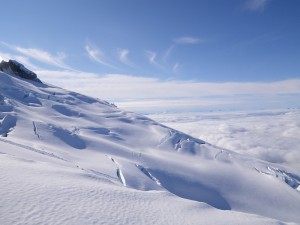
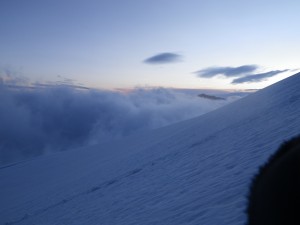
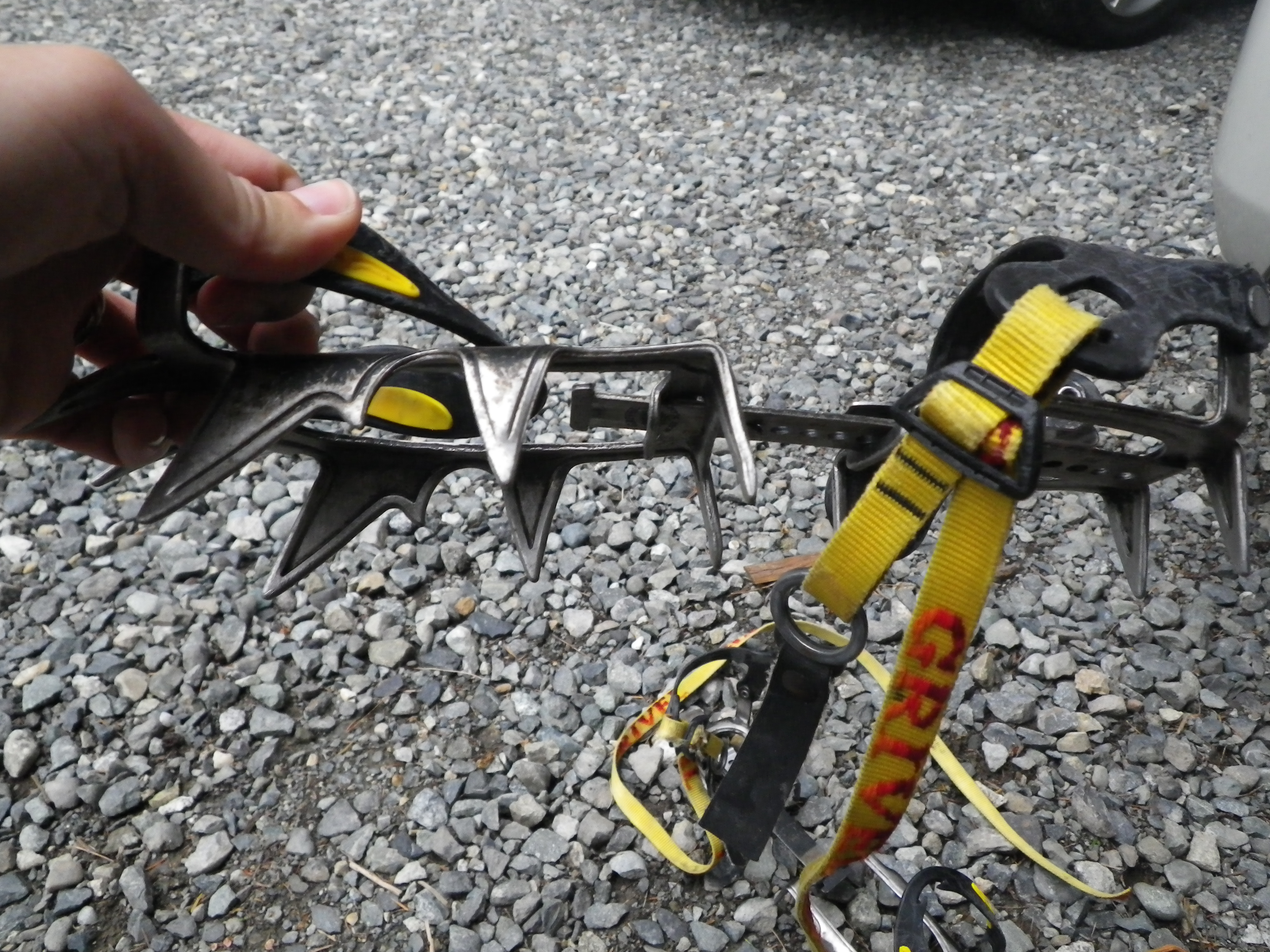
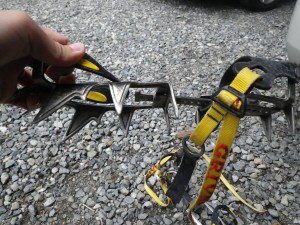
After a couple more hours of hiking, we finally reached a col below the summit ridge. Here, we stopped to put on our crampons. Crampons are sharp steel spikes that attach to the mountaineering boots to provide better traction on ice. The wind at this point was indescribable and nearly unbearable. I was truly miserable at this point. The only thing getting me through was the view of the summit. The summit was hardly visible, however, because of the snow and clouds aggressively blowing over it. I tried to take some photos of this but the photos couldn’t do it justice and did not capture the wind. As we climbed up the huge ridge towards the summit, it started becoming apparent that we would not reach the top. Dave, a software engineer, had already made the calculation that we were moving too slowly to accomplish it. Forest, not wanting to crush team morale tried to tell us that the summit was still possible although we knew otherwise. After some time, Forest and Margaret collaborated and informed us that we would indeed not make it but that we could climb for another fifteen minutes to get more experience. Turning around is an important learning experience and the whole situation brought to mind the basketball quote, “Your team is only as good as it’s weakest player.” On a rope line if a single member is having a problem it affects the entire group. That, combined with the nasty wind and poor snow conditions, made our guides concerned that they could account for our safety. We started climbing back and we stopped at a somewhat sheltered area to have a group talk and eat. My stomach had been audibly rumbling for hours by this point. As I pulled out yet another Peanut Crunch Clif bar (I had eaten at least 4 earlier in the day), I watched as a smile grew over Steven’s face and he reached in his pack to produce a pristine, non crumbled PAYDAY bar. The Hunger took over. A fight ensued over Steven’s hoarding of this delicious commodity. I won’t go into details here but Steven did give me half the bar, despite me having already eaten half his Twix bar and not having shared any of my own candy. As we continued to descend, the clueless leech, who had at one time cut in between our two rope lines (a serious no-no), and who had been following us for hours because he didn’t know the route, continued up the mountain. His crampons were not on correctly, his food source was a value pack of Hersey bars, and he was carrying a JanSport backpack. Every so often he would flop on the glacier to rest, because he wasn’t pacing himself. We were concerned about him going on, but there was no stopping him.
After eleven hours of climbing we finally made it back to our camp. Everyone sprawled on the ground around our tents, and pulled out more food to eat. We started packing up camp when we noticed a man glissading down the mountain. Glissading is basically sledding on your backside, using your ice-axe to control your speed. It is a dangerous practice because you cannot see crevasses or other obstacles that might be in your path. As he slid down the mountain, we noticed he was headed straight towards a moat, a place where the snow has melted away from a warmer surface (in this case a ravine with a creek). The moat dropped down about ten feet to the creek. He was several hundred yards from our campsite but we all began yelling in hopes of catching his attention. Jumping up and down while waving our arms we yelled and yelled. Finally hearing us, he frantically began trying to stop himself. Forgetting his ice axe, he flailed wildly at the slope with his arms and legs. He skidded to a halt with his feet resting on the edge, sending piles of snow cascading down into the gap. It was another extremely close call.

After watching this near-miss, we were slightly shaken and decided it was time to leave the mountain. Camp was quickly dis-assembled, and after the gear was all packed up, we headed back down. We were all tired and somewhat miserable, but Jenny, who had never been in the backcountry before, was especially worn-out. Her shin-splints were killing her, she was out of energy, and she just wanted to be home. She was so tired that she didn’t bother to properly pack her backpack, tying a large trash bag of debris to the bottom of her pack (so that it swung and hit her legs on every step), and carrying her tent poles in her hand instead of trying to find a spot for them. Dave took pity on her, and stuffed the poles in his own pack, but it was a miserable slog for Jenny. She fell at least 4 times, sliding down the path on her backside, her boots completely filled with water as she slogged through the middle of a creek carelessly (her gaiters and boots were open to try and relieve the pressure on her shins), and that trash bag smacked her with every jolting step downward. Then, when it was nearly over, her nose started to bleed, just to add insult to injury. When we finally reached the parking lot, she tossed her bag onto the ground, collapsed, and proceeded to pour a river of water out of each boot (which prompted a “That was the most awesome thing I’ve ever seen!” from our guides).

We all piled into the cars and headed back down the mountain to the small town of Glacier, a short drive away. There, Steven and I picked up our car and we all met at a local diner for our first non-dehydrated food in a week. Each of us ordered a huge, 1/3 pound burger and a large order of fries, and nobody left anything on their plate. We all had a great time reminiscing about the trip, telling stories, and finding more out about what its like to be a guide. We also asked why more people like our unwelcome lone warrior from earlier in the day didn’t die or get injured, and our guides explained that because guides were always present on Mount Baker, clueless people were able to avoid disaster by watching what the guides who were around did. That doesn’t mean people don’t die, however, as they told us about a climber who had died in very similar circumstances to our leech only a week earlier.

When all the food was gone (which took a surprisingly short amount of time), and the conversations were done (which took a lot longer), it was time to split up and head our own separate ways. We said our farewells to the people we’d lived with (and come to really like) in the past week, hopped in our car, and sped off. 3 hours later, we pulled into the parking lot for our beautiful tree-house, took our first shower in entirely too long, and collapsed into bed. Total time awake for the day? 21 hours.
Day 4, Sunday

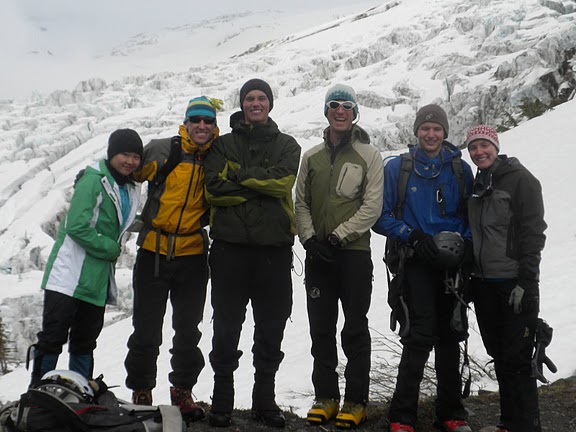
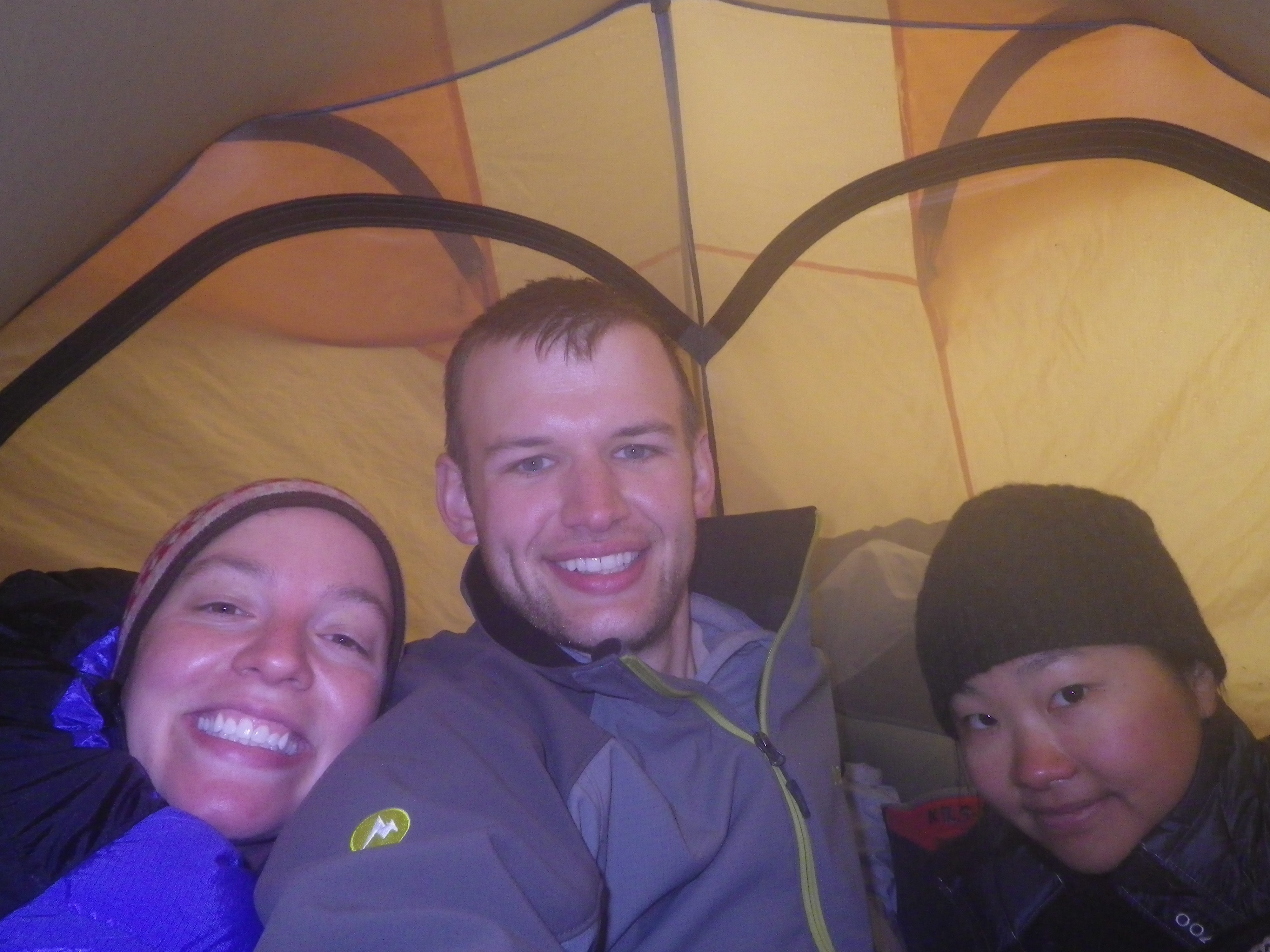
Jenny, Dave, Everett, Forest, Steven, and Lib

This was the first day for a potential summit attempt, and the night before we went to bed with the warning that we would likely be awoken at 2 AM to make the push.  I woke at 2 AM, and again at 3 AM to hear our instructors talking in the tent next door, but the call to get up never came. Forest and Margaret ultimately decided to postpone the attempt to give us an entire day to practice crevasse rescue, and to hopefully get slightly better weather for the actual attempt. They were afraid that if we did the summit attempt early, we would not be motivated to do anything the next day. What excellent foresight these guides have! Breakfast that morning was relaxed, but became increasingly exciting as we saw a sleeping mat from a campsite above us fly into the air. At first we sat watching as the mat and stuff sacks slid down the mountain, discussing the other group’s misfortune. Seconds later, however, a sleeping bag took flight – a much more serious situation. Our group immediately went scrambling out on the mountain to recover the articles. We returned them back up to their owners and returned to our camp, newly motivated to check the rocks holding down our tents. While smugly commenting on the other groups misfortune (amusingly,  they didn’t realize their stuff had gone airborne, even as we shouted to try and alert them) we saw a rain-fly literally sweep up into a funnel of air and shoot up 100 feet into the air and down the mountain. As we gaped at the spectacle of a large green tarp floating high above us, our guide shouted “Here comes the tent!” We looked up the mountain and saw a large tent rolling end-over-end towards us. The men of our team sprinted out into the snow to try and corral the tent, and Forest managed to get into its path and football tackle the tent. Once again we hiked uphill, and it was returned, without the fly, back to its campsite (this time with heavy rocks put on top of it). Apparently it is common for people to return from a summit climb and think that their tent or supplies have been stolen, as their campsite has been swept clean by the wind. With the excitement of the morning past, we put our  harnesses on and roped in as a team to walk onto the glacier so Forest and Margaret could locate the perfect crevasse to practice our rescue techniques.

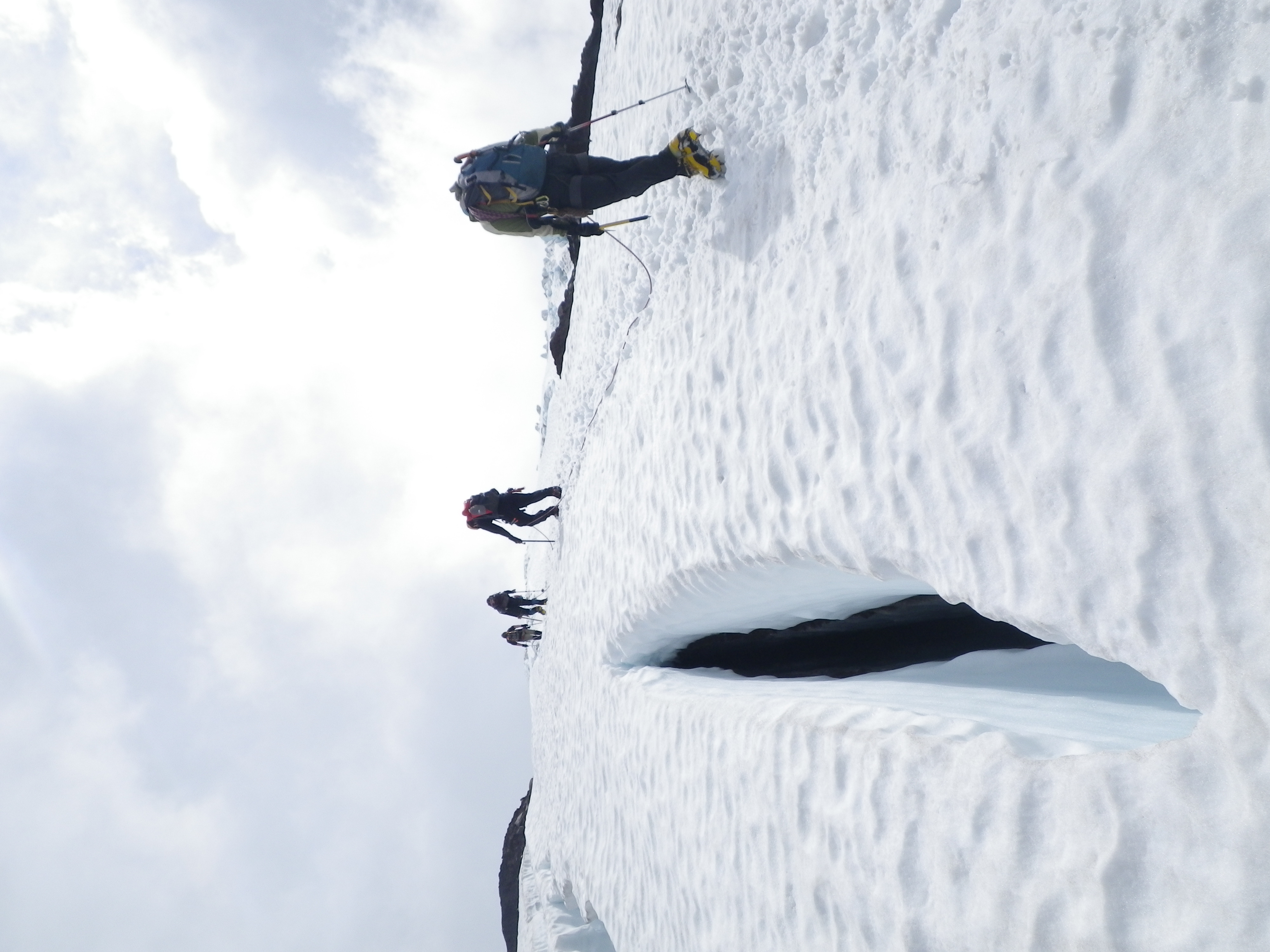
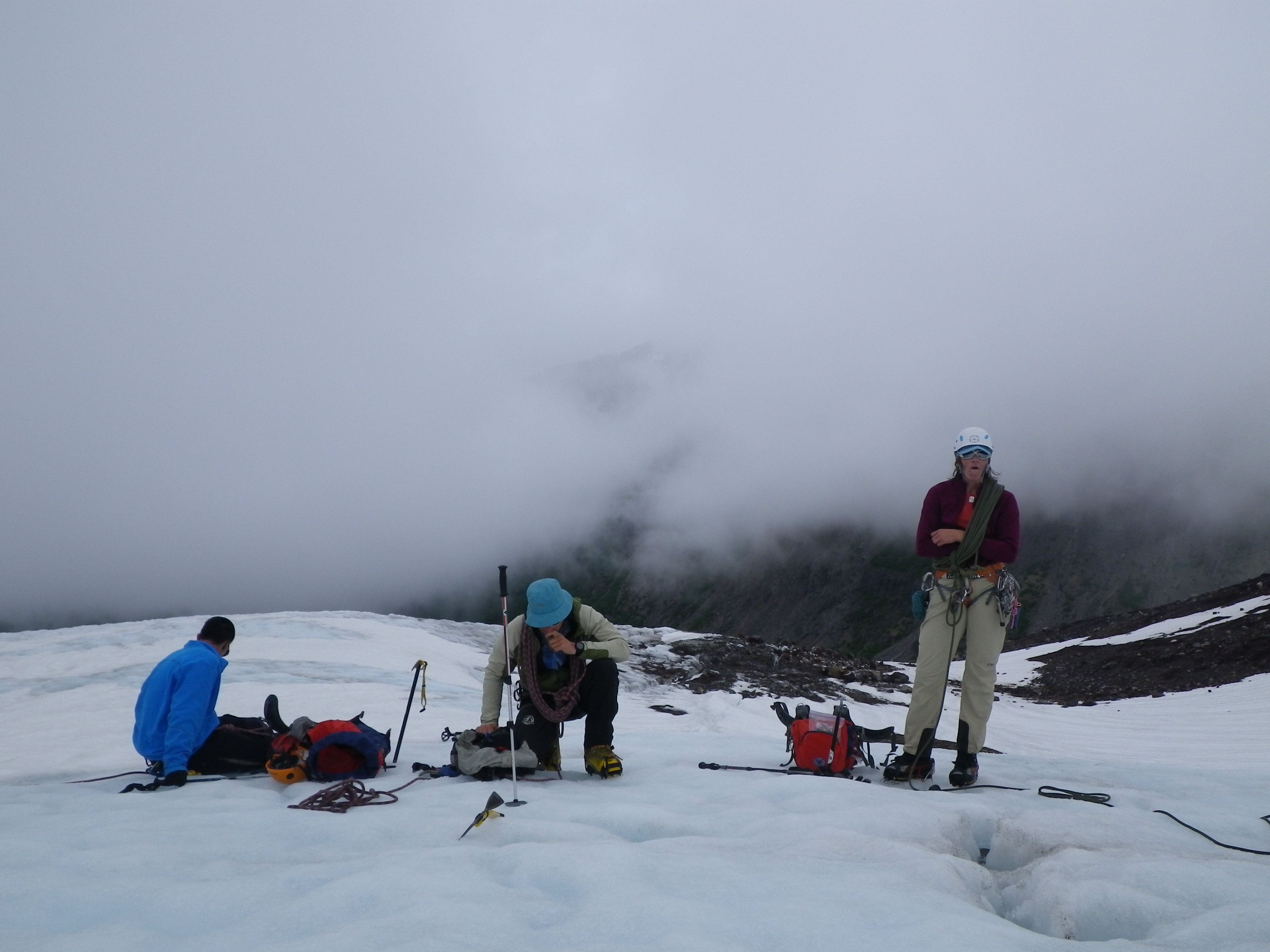
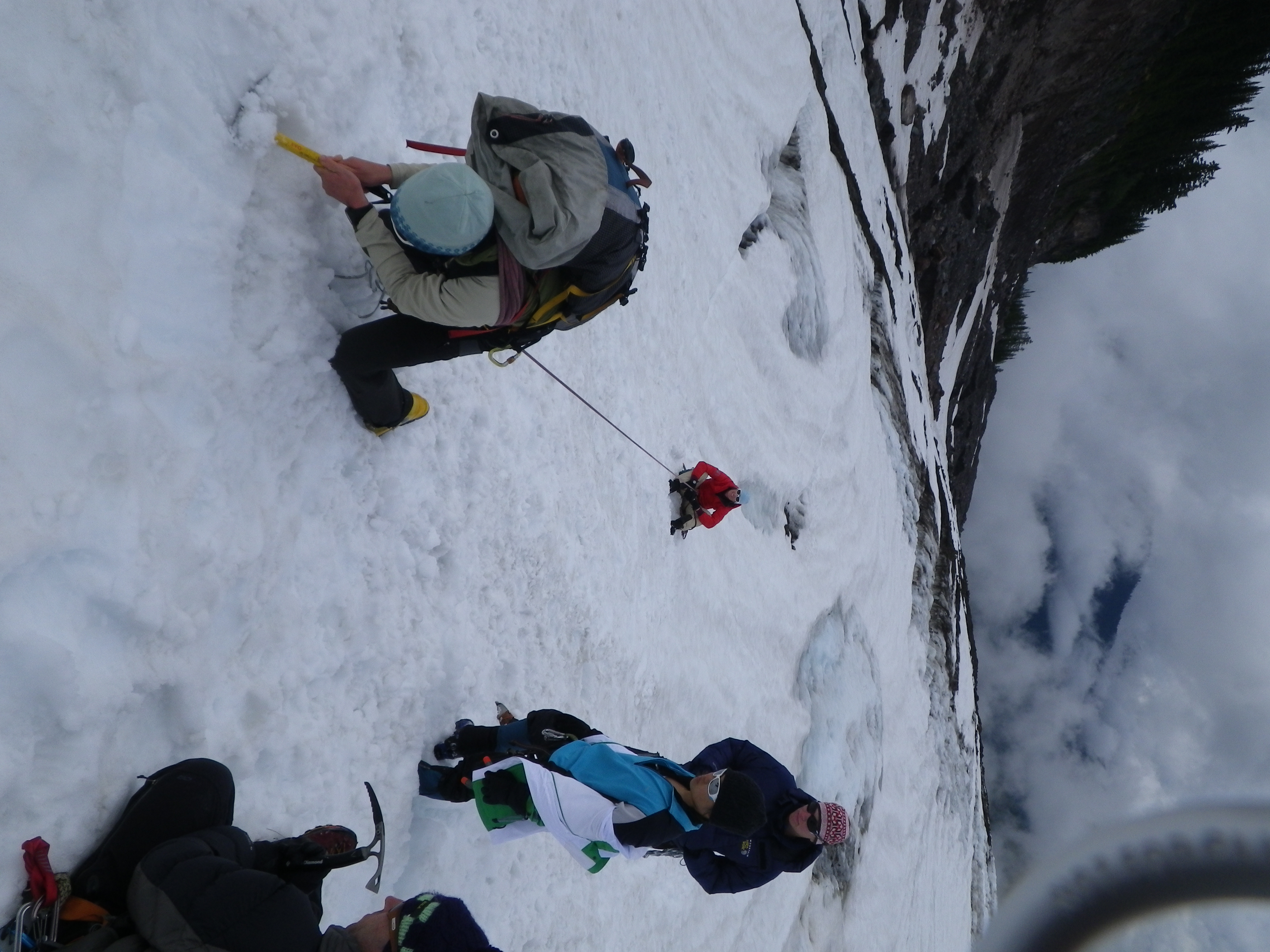
After an hour and a half or so of hiking, we eventually reached an area of the glacier that was riddled with large crevasses. Our guides brought us to a halt so they could confer with one another, and soon we were hunting through the field looking for the perfect crevasse. After a short search, Forest and Margaret settled on a nice, large crevasse with no overhang and a smooth lip for us to leap off of into the deeps. At this point Forest began probing the ground around us with an avalanche probe to make sure we were on safe ground, and he soon marked off a safe perimeter for us to operate in, unroped. The ropes were quickly taken off, some extra layers were put on to ward off the cold, and we gathered around for some more instruction. After a quick review of the crevasse rescue procedure, we set to work building snow anchors to safely hold us while we worked in the crevasse. Once that was done, it was time for someone to jump into the crevasse. Two rope teams were operating at once, with each team having a rescuer and a victim. I was first up for the victim on our team, with Libby being my rescuer. (For those that worry, each rope was attached to a primary snow anchor, a secondary snow anchor, had an instructor holding it on belay, and was of course attached to the rescuer. Any one of those points are capable of stopping a fall).

Soon enough, I was sliding into the crevasse, and Libby was stopping my fall and trying to rescue me. Shortly afterwards, JR dropped into the crevasse beside me, and we settled down for a pleasant half hour of looking at the crevasse, taking pictures, and eventually discussing skiing and software. Eventually Libby started hauling me up, and before you knew it I was back on solid ground. Next up it was my turn to rescue Dave, the boisterous software engineer. He leaped into the abyss, I fell to the ground to arrest the fall, and took my turn setting up the rescue system. Rescuing someone from a crevasse, for those who are interested, involves transferring the fallen person’s weight off of you to an anchor, roping yourself safely to the anchor so you can check the victim for injuries, and then setting up a series of pulleys and “ratchets” using carabiners and knots so you can pull up the victim without losing ground if you drop the rope.

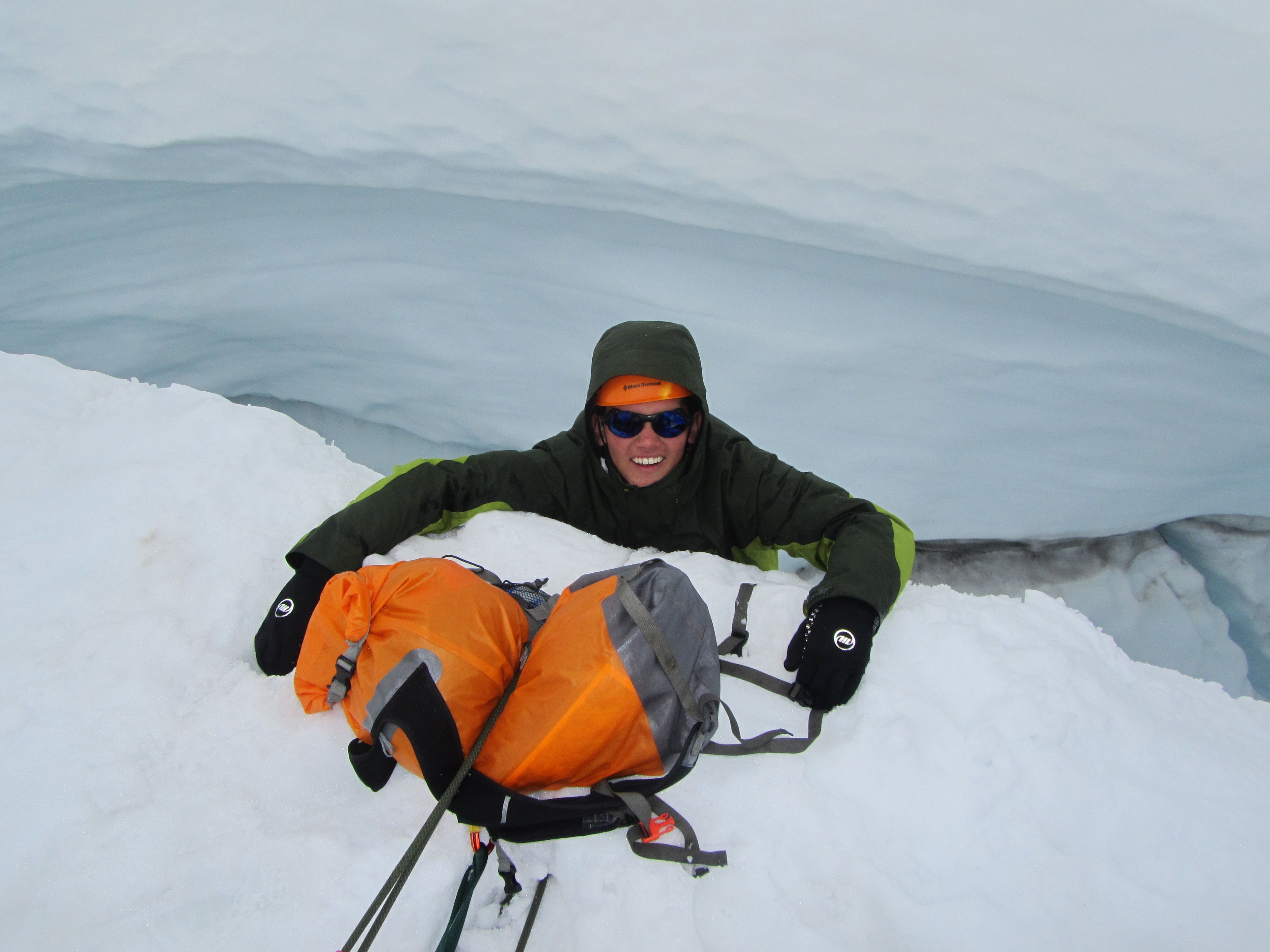
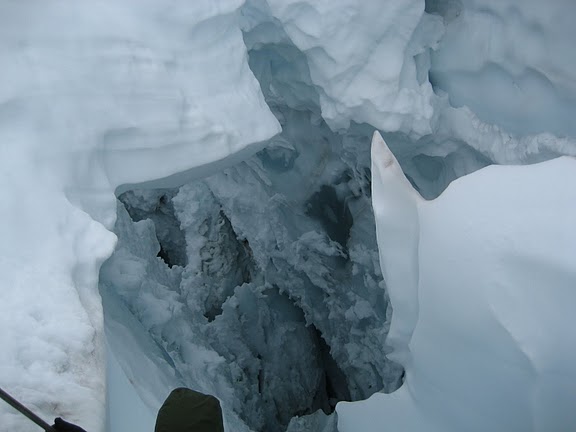
looking down 100' crevasse

Generally you set things up so that you pull with a 6-to-1 pull ratio, which allows you to rescue people much larger than yourself. Not to blow my own horn or anything, but It was here that my aptitude for knots (and my studying of Freedom of the Hills before the course) came in handy, as I proceeded to haul Dave out of the crevasse in less than 10 minutes, a full 20 minutes faster than anyone else. (Our guides words: “That system was regurgitated like a true engineer”). Unfortunately, that left Everette, the 15 year old kid on our trip, down in the crevasse by himself. Worse, his rescuer accidentally tangled all of his rope, and forgot to rig up a few knots ahead of the fall, so he spent by the far the longest time in the crevasse. By the time we pulled him out, he was in full-blown freakout mode, and needed a little time to recover. The poor kid could be heard shouting every time the rope slipped a little bit and he slid further into the crevasse.

Finally, it was Libby’s turn to go into the crevasse, and Dave’s turn to pull her out. Libby bravely walked up to the edge, sat down, and counted “1, 2, …I can’t do this!”. She then proceeded to sit there at the edge for several minutes, mustering up the courage to leap in. Eventually, she took a deep breath, pushed off the side, and with only a small blood-curdling scream, plummeted 4 feet down into the crack. For this show of bravery, she was rewarded with: peals of laughter from above, as everyone from her rescuer to the guides collapsed to the ground, giggling helplessly. Libby was a trooper, though, and after only a few more small screams (as the rope settled into the snow and slid her further down), pulled out the camera and spent the rest of her time taking pictures of the depths of the crevasse. The inside of the crevasse is actually an awe-inspiring place, as the deep blue ice slices deep out of sight into the glacier, with wild formations, shapes, and caves carved into the sides by dripping water.

Once Libby was safely pulled up, it was time to head back to camp for supper. We proceeded to hike back to camp to boil water and prepare for what we knew would be our summit attempt early the next morning. With everything in camp ship-shape, we slipped into bed early, ready to rise again in 6 hours.

Day 3, Saturday

After raining all night, it continued raining into the morning. We made breakfast in the rain and packed up camp, in hopes of moving up to a higher camp later in the day. In a constant downpour we practiced knot tying on a rope suspended between two trees. It was extremely cold and while we learned and practiced Margaret continually made us hot drinks, including a mountaineering favorite: Hot Nuun. Nuun is an electrolyte tablet that can be added to water that tastes like Tang and is

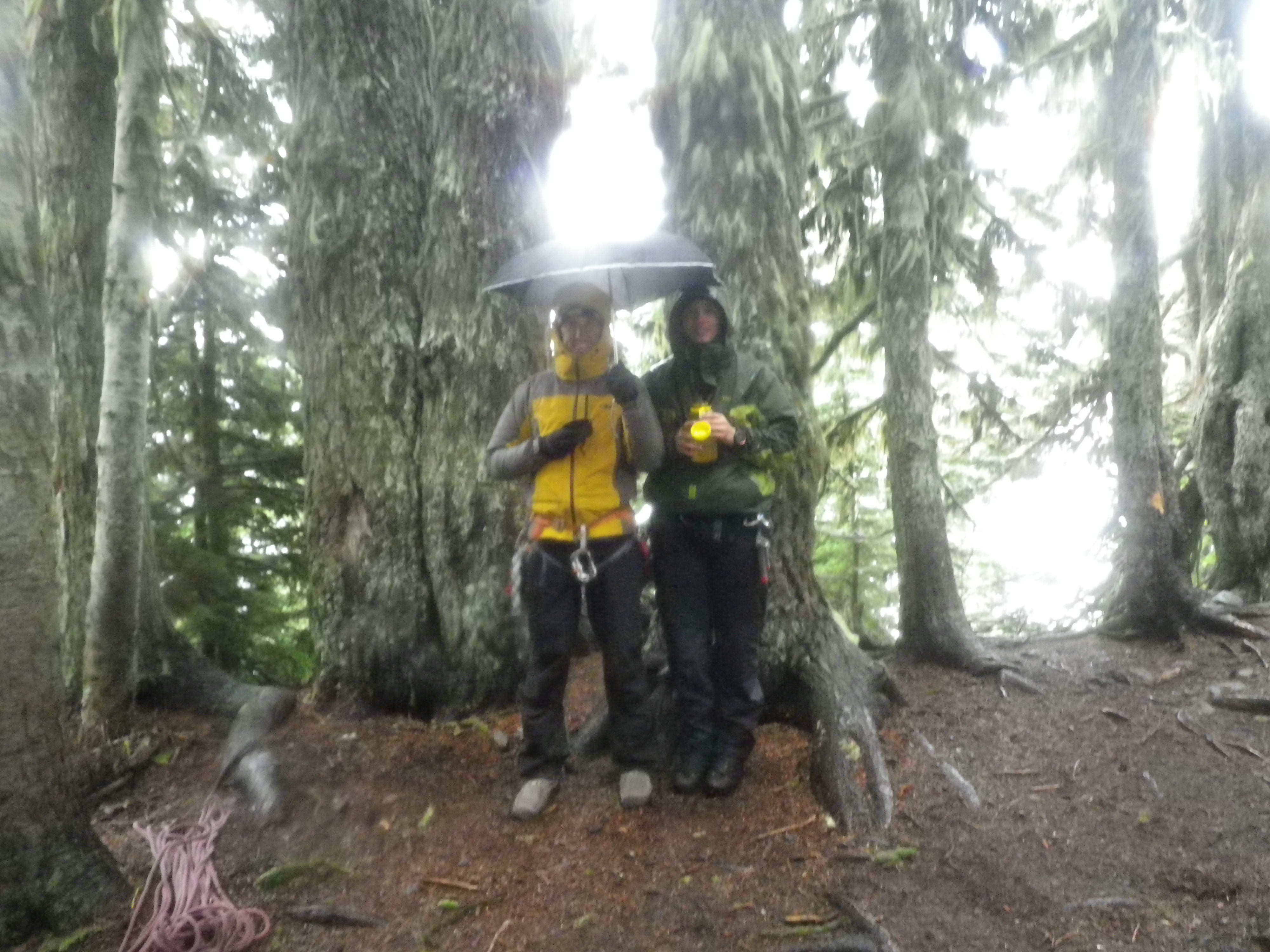
Dave and Everett

ridiculously delicious. I am pretty sure, like other foods and beverages on the mountain, in normal life, it is probably repulsive. We also learned how to set up the ropes for a crevasse rescue system called a “Drop C-Z.” After several instructional hours, and soaking wet, our instructors decided that our cold wetness was probably hampering our ability to retain information. We unpacked camp and tucked into our sleeping bags. I had brought Robinson Crusoe with me to read but after a couple of pages found that my arms were too sore to hold the book up to read. I settled in for on and off sleep with intermittent moments of pure hunger, while Steven read away in his book. I was uncomfortably hungry and found myself nibbling away at parts of my lunches trying to justify making them smaller. In the course of a couple of hours I had cleaned through most of my snacks, some of Stevens, and part of my lunches. It was not a proud time on my part. After awhile we heard Forest and Margaret circling around the tent to inform us we would be hiking to our next camp. Steven of course snitched on me for eating all of my food. Although in retrospect he could have been worried about The Hunger getting the best of me. The hike up to the Hog’s Back camp site was almost entirely on snow. The packs of course were heavy and the weather of course of was rainy. We set up camp on a small area of rocks with careful attention to anchor our tent with heavy rocks. With harnesses back on we again practiced walking as a rope team. We made it back to camp for a late dinner and headed to our bags pretty exhausted.

Still hungry,

Paydays are like GOLD Lib and Hiding his rations Steven


Day 2, Friday

Today Margaret, our second guide, joined the group. We woke up to Forest and Margaret joking as she unpacked her bag and arranged things. We made breakfast (everyone pooled water for boiling and then divided it up for instant oatmeal, except for Jenny who ate a Clif bar and buffalo sticks). Afterward, camp was tidied up, food was hidden inside sleeping bags in the tent, layers were thrown into our packs and we headed off down the moraine to the glacier. There, we pulled on our harnesses for the first time ad learned how to use crampons. (4 wheel drive!) There is a particular method to walking with crampons that we all had to learn- a waddling, slightly duck-footed gate to keep from shredding your pants and legs. You also have to learn to keep your feet parallel to the ground at all times so the tines can bite, unlike normal boots where you often use the edges in steep terrain. This required a level of ankle flexibility most of us lacked. After walking around on the ice, trying to see how steep a slope we could climb without sprawling on our faces, we roped up and learned how to move in a four man rope team. This required constant communication and coordination to keep ropes spread out but moving smoothly. We moved around the glacier for a couple of hours, practicing our crampon and rope skills while looking for an appropriate place to practice crevasse rescue. When none of the crevasses in the area looked promising, we headed back to a flatter area to practice building snow anchors. Along the way we learned more about the dangers of the glacier as we passed under an ice fall and we were encouraged not to stop as we were in the firing range. While eating lunch we got another scare, as several hundred feet above us on the top of a moraine some hikers appeared. Their dog spotted a marmot and leaped off the ridge and onto the steep loose shoulder to give chase. It soon realized the danger it was in and started trying to reach its owners above. It couldn’t make it back up, however, and on each attempt it would lose traction, falling and skidding down the slope towards the sheer cliff immediately below. Worse, his owners lay down on the the ridge, hanging over the highly unstable edge in an attempt to reach him. Everyone held their breath in horror, and our guides were certain that we were going to shortly be dealing with at best a dead dog. Fortunately, the dog managed to lunge close enough to the top for his owners to snag his paw and pull him to safety. After that hair raising experience, we got to practice building snow anchors (digging a trench with your ice axe and burying the axe or another strong object with a sling tied around it in the trench). We then moved on to the most amusing part of the day; crevasse self arrest. We were roped into pairs and took turns being the victim and rescuer. The victim would run downhill, yanking the rescuer off their feet, who then had to preform a self-arrest to stop the “fall”. Once stopped the rescuer had to build a snow anchor while holding the victim (who was pulling with all their might), and then transfer the rope holding the victim to the anchor. Some people performed their roles as victim more vigorously than others of course. Finally, we headed back up to camp for supper. The water was boiled and everyone prepared their food, and then we all sat together eating and drinking hot cocoa and chatting. Forest impressed us all by making homemade, fresh Thai, with peanut sauce and fish while we enjoyed freeze dried meals. Shortly afterward, the heavier rain started to hit and everyone retreated to their tent for the night. It was decided that Jenny should have the middle position in the tent between Libby and I to keep her warmer. With the design of the tent being an asymmetrical almost pentagon shape, Lib and I found our feet smooshed against the wet ends of the tent while Jenny, who stands at 5’1”, had plenty of room to stretch out and store stuff above her head. She had also acquired Libby’s never before worn Patagonia Capalene shirt to go with the one she had borrowed from me earlier.

Trip score so far: Jenny has acquired all the water from one of our bottles, Dave’s spoon or fork (whichever he was not using), two Patagonia shirts, prime tent space, ice ax and two ice screws (brought to camp by Margaret). (Reader, before you start feeling resentment for our groupmate just know that the trip proves to be miserable for this camper).

Off to snooze,

One Shirt-Less Steven and Libby

What a way to spend a one year anniversary?!


Thursday, Mountain Day 1

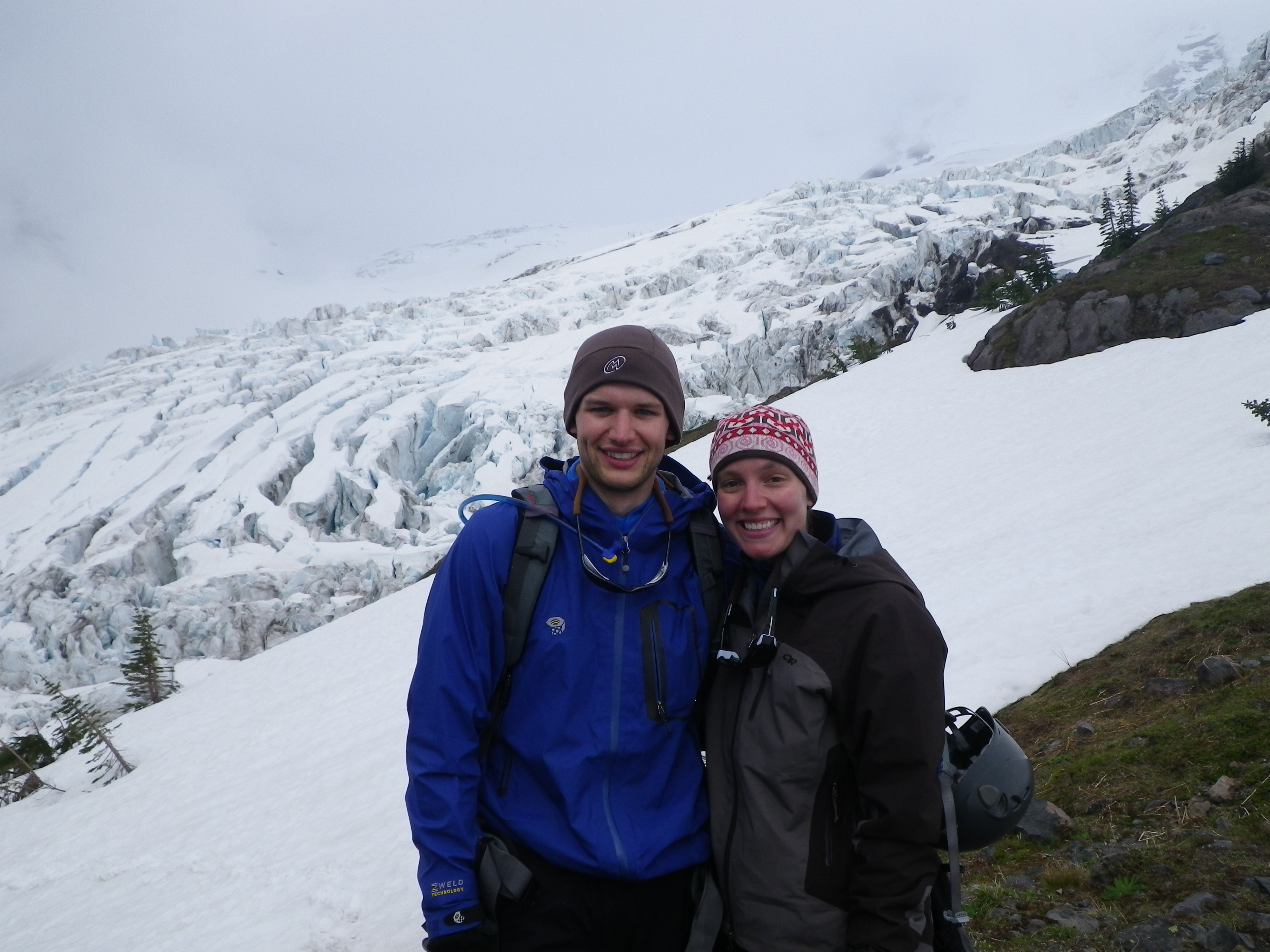
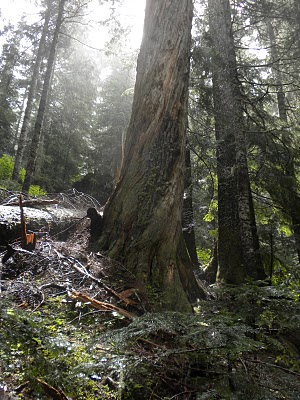
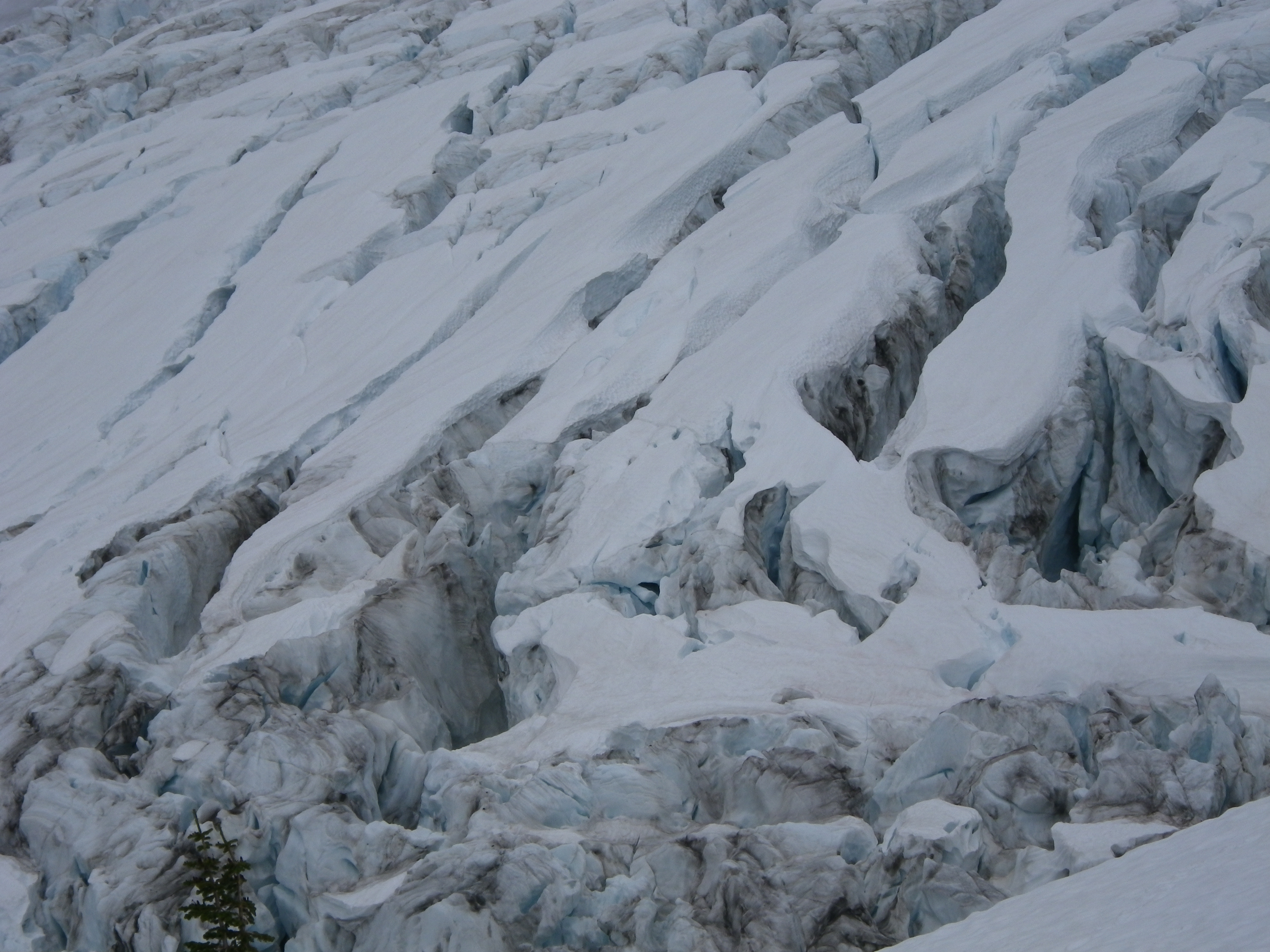
We left downtown Seattle at 5:30 am to drive to Glacier Ranger Station at the base of Mount Baker. During the entire two hour drive there was a steady cold rain. Under a small overhang outside of the station we met the rest of our group, Dave and J.R., also software engineers, Jenny, Everett, and Forest, our guide. We dumped our packs and did a quick gear check. We had our first worry when Forest mentioned to Jenny it was rare he had to tell someone they had not brought enough stuff. Steven graciously, after several moments of hesitation, offered his brand new Patagonia Capilene 3, top of the line shirt to our egregiously under packed group mate. Forest then instructed us on the mountaineering style of packing a pack which is different than backpacking. With our packs full, and brief introductions out the way, we carpooled down to the trail head. We set off down the Heliotrope trail in our plastic Koflach mountaineering boots and knee high gators with our ice axes, crampons, zero degree bags, pounds of food and supplies packed away. The hike was not easy. There was a steady and sometimes steep incline the entire way. There was a challenging creek crossing that promptly soaked our feet. The moment before that crossing would be the last time my feet would be dry for the rest of the trip. It was not long after the creek that we started crossing snow fields. The pleasant smell of the Douglas firs and the absolutely lush environment was gorgeous and made the grueling hike bearable. The misting rain continued through the several hour hike and validated the claim that Mount Baker gets more precipitation than anywhere else in the United States. We reached our first campsite Mirkwood. We put down our heavy packs and Jenny reached in her pack and pulled out a completely empty Platypus water bottle. As she took the wrapper off Forest asked if that meant she hadn’t carried up any water, and asked her when the last time she had had any water. 5 am. Steven handed her an extra Nalgene and told her to start chugging. Mirkwood is an ancient growth rainforest with moss growing on and hanging from the trees. The site is on a moraine, an area of rock and debris pushed up the surface by the Coleman Glacier. We decided on tent groups and Jenny was placed in a group with Steven and I. We set up camp in the rain and hiked onto the glacier. Once on the glacier, Forest taught us how to walk on snow with our mountaineering boots to maximize our efficiency. We learned uphill, downhill, side foot, crossover, duck walk and plunge step. What was seemingly easy was actually awkward. From the glacier there was an amazing view of hundreds of crevasses. Crevasses are the cracks that form in the glacier that can be hundreds of feet deep. They also pose the greatest threat to climbers as they are not always visible because the top can be covered in snow or a thin layer of ice. A major skill of mountaineering is knowing crevasse rescue. The main reason teams are roped together is to aid in rescue. On the opposite side of the crevasse field was a view of Mirkwood. From the glacier the moraine appears as a cliff with the edges exposed and crumbly. Every so often a loud crash could be heard with rocks plummeting off the edge. Forest pointed out to us the danger of hiking near the edge of a moraine as they are quite unstable. An aspect of a glacier is that the ice is in motion therefore the glacier has many of the same properties as a river, although it moves much slower. (Glaciology 101). After mastering the art of walking on the snow, we pulled out our ice axes for an explanation of self arrest. Self arrest is the technique of stopping yourself and/or your team from falling down a glacier or into a crevasse. Using the ice ax, you fall to the ground, dig the pick of the ice ax into the snow and ice and dig your feet in the snow. We practiced self arresting while falling forward, backwards, and upside down the mountain. This practice was fun and got us even wetter. We headed back to camp to cook dinner. At this point Forest graciously offered to fill everyone’s water bottles at the nearby creek. Ten minutes of so later he reappeared with a pack full of water bottles and a sheepish expression on his face “So, uh, who has the reaaaally slippery orange Nalgene?” Dave chimed in, “You mean ‘had’ right?” And somewhere in the North Cascades is my dear water bottle from Indiana’s only mountaineering store. At dinnertime Jenny realized that she had no utensils with which to eat. We made hot drinks, something we would do very often on the trip and went to bed after a long day.
Signing off,
Soaky Socks Lib and Grey Jumpsuit Steven

Into Thinner Air – Day 1

We have successfully made it to Seattle!

It wasn’t the most pleasant trip we’ve endured, but we made it with all of our luggage still present. We stumbled into our hotel at midnight Pacific Time last night after 12 hours of traveling (for those of you who don’t want to do the math, that’s 3 AM Eastern), and promptly dropped everything and hopped in bed. Along the way we’d gotten to experience Indianapolis airport food (Tiny portions! And expensive!), Frontier Airlines customer service (“It’s a Whole New Animal!” Over and over again, repeated every time the pilot, flight attendant, or customer service agent finished an announcement), Frontier in-flight service (warm chocolate-chip cookies), dashing through the Denver airport to reach a connecting flight that was taking off in 10 minutes (From gate A59 to A60. It wasn’t quite the sprint we’d envisioned), Denver Airport Security (removing the girl from our plane who was tripping on drugs at the time), and the joys of trying to lug 150 pounds of equipment through an airport.

That last bit was made particularly difficult thanks to the Fort Wayne Eddie Bauer store; they’d threaded the backpack straps of our duffel bag the wrong way, which meant that instead of acting like a gargantuan backpack, it acted like a gargantuan sack of potatoes that kept trying to leap off my back, and when that wasn’t successful, settled for trying to rip my shoulders off. Thankfully I noticed that upon inspection at the hotel, so we shouldn’t have the same issue again.

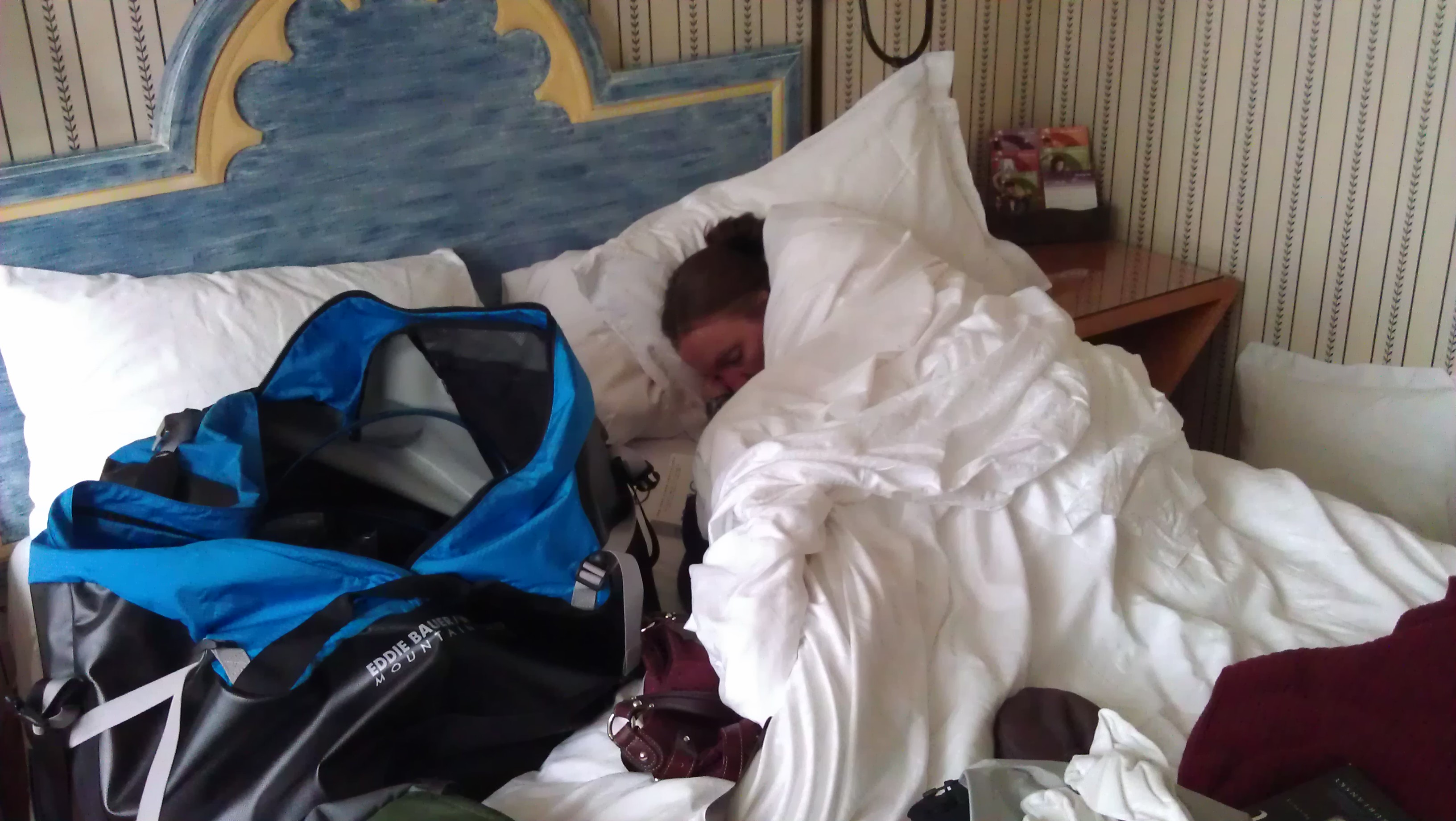
Since then we’ve slept for 10 hours, had a nice brunch with some of Seattle’s famous coffee, and now we’re just lounging around before we pick up our rental car and start trying to assemble all of our equipment. For me, that means some reading and catching up on the Tour de France. Libby, meanwhile, is enjoying her favorite pastime.